


Outcome of the two appeals: On September 21, 2023, the Tel Aviv District Court dismissed the appeals in Newron Pharmaceuticals v. Registrar of Patents and Amgen v. Teva, heard together on the obligation to report foreign patent term extension orders for reference patents. The Court adopted the Registrar’s interpretation of the reporting deadline prescribed by Section 64E(e) of the Israeli Patents Law and ordered each appellant to pay NIS 40,000 in costs to the respondent in its appeal. For a separate later proceeding in the same field, see the Novartis decision (Hebrew). For the distinction between initial and supplementary notices and the grounds for opposition, see the guide to opposing patent term extension orders (Hebrew).
The proceedings were heard before Judge Gershon Gontovnik of the Tel Aviv District Court. Judgment was delivered on September 21, 2023.
The parties: In the first appeal, the appellant was Newron Pharmaceuticals S.p.A. and the respondent was the Registrar of Patents, Designs and Trademarks. In the second, the appellant was Amgen (Europe) GmbH and the respondent was Teva Pharmaceutical Industries Ltd.
The facts: Both appeals challenged decisions of the Registrar refusing applications to extend patent protection. In both cases, an Israeli basic patent had been registered and a marketing authorization granted in a recognized state, but no extension order for the reference patent had yet been issued there, a situation addressed by Section 64E(e) of the Law.
Foreign reference patent extensions were subsequently granted. However, the applicants did not notify the Registrar within ninety days of the grant of those orders, as required by Section 64E(e)(2). The question was whether the Registrar was required under Section 64E(e)(4) to cancel the intention to grant an extension order, or could refrain from doing so while the basic patent’s ordinary period of protection remained in force.
The Newron Proceedings
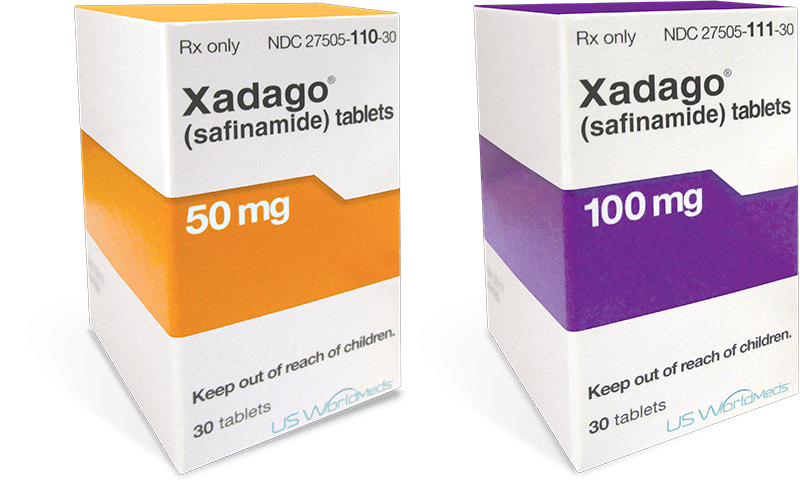
Newron, a pharmaceutical company developing treatments for neurodegenerative diseases, sought an extension of the Israeli patent relating to its medicine Xadago.
The patent, due to expire on April 8, 2024, concerned safinamide for treating Parkinson’s disease. Marketing authorization was granted in Europe in 2015 and the United States in 2017. An Israeli registration application was filed in 2018 and approved in 2020. Newron applied for an extension on August 5, 2020, and a notice of intention to grant an order was published.
On August 30, 2021, Newron notified the Patent Office that a US extension order had been granted on May 25, 2021, claiming that it had only then learned of the order. Its application was rejected on September 9, 2021 because notice had not been given within the ninety-day statutory period.
Newron requested an extension of that period, but the Registrar refused. According to the decision, its notice was ten days late. Newron argued that it had learned of the US order belatedly because of an internal failure; that the reporting obligation arose only after the basic patent expired; and that the legislative amendment was unconstitutional.
The Registrar rejected these arguments. Information reaching Newron’s US attorneys was sufficient; the reporting obligation applied before expiry of the basic patent; and the statutory arrangement was constitutional, balanced competing interests and promoted certainty. The Registrar therefore upheld the Deputy Superintendent of Patent Examiners’ decision as correct, reasonable, proportionate and constitutional. Newron’s objection was dismissed, resulting in its appeal.
The Amgen Proceedings
Amgen acquired a patent relating to apremilast, the active ingredient in Otezla, a medicine for psoriasis. The patent was due to expire in 2024, and Amgen sought to extend its protection.
Eligibility for an Israeli extension required extension orders in two recognized states. Amgen obtained orders in the United States and Italy. Teva, a competing pharmaceutical company, argued that Amgen had failed to report the Italian extension order on time.
The Registrar accepted Teva’s argument and cancelled the extension order. Amgen appealed, arguing that the Registrar’s interpretation was incorrect and/or that the statutory provisions were unconstitutional. Its main arguments, and their rejection, were as follows.
- Late reporting of the Italian order: Amgen argued that the ninety-day notice period applied only after expiry of the basic patent. The Registrar held that it began when the foreign extension order was granted and that Amgen had missed the deadline.
- The understanding between Israel and the United States: Amgen claimed that strict interpretation conflicted with Israel’s undertakings under that understanding. The Registrar found no contradiction between the document and the Patents Law.
- Property rights: Amgen argued that strict interpretation infringed its rights. The Registrar held that property rights were not absolute and could be limited to protect public interests.
- Good faith: Teva claimed that Amgen had failed to disclose relevant information. Amgen responded that another company had handled communications with the Registrar. The Registrar found the explanation unsatisfactory but, given the result, did not need to decide the legal implications.
The Registrar accordingly upheld cancellation of the patent term extension order.
The appellants challenged their respective decisions before the Court. They argued that the Registrar’s interpretation was neither correct nor appropriate, and that if that interpretation was correct, the statutory arrangement was unconstitutional.
Outcome of the proceedings: Both appeals were dismissed. Each appellant was ordered to pay the costs of the respondent in its appeal, in the amount of NIS 40,000.
Key issues addressed in the judgment:
International Patents in Israel
Many inventions developed in Israel are the subject of Israeli patent applications but may also be protected in other countries. The Israeli Patents Law provides for domestic patent protection in relation to inventions protected abroad, as well as for the extension of an Israeli patent term by reference to relevant developments concerning foreign patents.
Basic Patents and Reference Patents
Basic patent: An Israeli patent protecting a substance, process, medicinal product or medical equipment. Reference patent: A patent in a recognized state protecting corresponding subject matter and serving as the foreign reference for an Israeli patent term extension.
Patent Term Extensions Based on Reference Patents
An Israeli patent term extension application may rely on extension orders granted abroad.
Conditions for an extension order: The basic patent must remain valid; the medicinal product must be registered in the Israeli Register of Medicinal Products; the registration must be the first authorizing medical use of the substance in Israel; no previous extension order may have been granted; and the statutory conditions concerning marketing authorizations and foreign extensions in the United States and recognized European states must be satisfied. The framework also includes the “two-state requirement” for foreign patent term extensions.
Procedure: An application is filed with the Registrar and examined under the statutory timetable, followed by publication of a notice of intention to grant an extension order or notice of rejection. The statutory scheme prescribes sixty-day periods for certain steps.
Early applications: An application in Israel may be filed before foreign extension orders are granted, subject to the applicable conditions, including marketing authorization in a recognized state.
Israeli law thus allows foreign authorizations and patent term extensions to be taken into account in determining the extended protection of domestic patents. The mechanism has detailed conditions but also permits an early application.
The Registrar’s Interpretation
The Court held that the Registrar’s interpretation was consistent with the clear wording of the Law. It drew on its analysis in Administrative Appeal (Tel Aviv District Court) 12124-01-22, Merck Sharp & Dohme B.V. v. Registrar of Patents, Trademarks and Designs (Nevo, 2022).
The Court dismissed Amgen’s appeal and upheld the Registrar’s application of the patent term extension provisions. It explained that the applicant must inform the Registrar when foreign reference patent extension orders have been granted or applications for them have been finally rejected; that notice must be given within ninety days of the grant or rejection; and that failure to do so prevents an extension order from being granted in Israel.
This interpretation followed the Law’s unambiguous wording. The Court acknowledged that in exceptional and rare circumstances statutory provisions may be interpreted in a manner departing from their wording, but found no basis for doing so here. Consideration of the legislative objectives confirmed that the ordinary language did not produce an absurd outcome and should prevail.
Amgen’s appeal was therefore dismissed and cancellation of its extension order upheld. The Registrar had interpreted the Law correctly, and Amgen had not met the requirements for an extension.
The Statutory Language Supports the Registrar’s Interpretation
Statutory interpretation begins with the words of the Law, which define the permissible interpretive framework. The Court regarded the relevant provisions as clear and precise. Section 64E(e)(2) requires an extension applicant to notify the Registrar within ninety days when foreign reference patent extension orders are granted or applications for them finally rejected.
Section 64E(e)(4) provides that no temporary or final extension order may be granted if the required foreign orders were not obtained before the basic patent expired or the applicant failed to report their grant. The legislature expressly addressed failure to report within ninety days. The plain language creates a categorical consequence: without timely notice, no extension order may be granted.
The appellants pointed out that the provision also requires the Registrar to publish an online notice cancelling the intention to grant an extension order, within a sixty-day period measured by reference to the statutory milestones. That publication might be delayed. The Court explained, however, that this concerns the procedural publication, not the prior substantive sanction barring the extension.
In exceptional and rare cases, such as when an obvious and serious legislative drafting error would produce an absurd outcome contrary to the statutory purpose, interpretation may depart from literal wording. The judgment referred to Aharon Barak, Interpretation in Law: General Theory of Interpretation, Volume I (1992), pp. 589, 596 et seq. and 607. In such circumstances, an interpreter may correct the wording to give effect to the legislature’s intention. But the Court held that the legislative purposes in the present case confirmed the ordinary meaning rather than undermining it.
The Legislative Purpose of the Patent Term Extension Regime
The regime resulted from a comprehensive legislative amendment enacted in 2014 to achieve several objectives. Yonatan Drori, Patent Law, Volume I (2023), p. 235, explains that the amendment implemented the document of understandings signed on February 18, 2010 between the Government of Israel and the United States Trade Representative concerning intellectual property protection for medicinal products and medical equipment.
The amendment was intended to increase certainty for both originator pharmaceutical companies and generic manufacturers. It reduced the number of recognized states used to calculate Israeli patent term extensions and sought decisions on applications as early as possible, facilitating the opening of the Israeli market to generic medicines and more predictable state expenditure on medicines and medical equipment. The Court expressly referred to this explanation and highlighted the emphasis on early determination.
On one hand, the Law takes account of patent holders seeking extensions. The patent term is limited, and a substantial part may pass before a medicine receives marketing authorization. This delay arises from regulatory procedures that can be especially complex in the pharmaceutical sector. The judgment cited Civil Leave to Appeal 386/22, Boehringer Ingelheim Pharma GmbH & Co. KG v. Registrar of Patents, Designs and Trademarks (Nevo, 2022).
Taking account of protection for reference patents abroad may reduce disparities between the terms of protection in different countries. But the legislature did not intend to compensate patent holders at any cost. The competing public interest is in promoting competition in Israel and therefore limiting exclusivity. Foreign patent terms are relevant reference points, not an entitlement to the longest term available abroad. The Court cited Civil Leave to Appeal 2070/19, UCB Pharma GmbH v. Registrar of Patents, Designs and Trademarks (Nevo, 2019).
Market entry requires advance planning, making early certainty about patent expiry particularly important. The legislative materials emphasized rapid decisions on extension applications. The applicants’ superior access to information about foreign extension orders justified the requirement to report their grant or final rejection within ninety days.
The explanatory notes to the Patents Bill (Amendment No. 13) (Extension of Protection Period), 2012, Government Bills 792, p. 794, explained that an extension application should be examined close to filing, or upon grant of the basic patent where filed earlier. The aim was to bring forward the decision on an extension order and thereby increase certainty regarding the total period of protection for the patented medicine or medical device.
The same explanatory notes, at p. 795, placed responsibility on the applicant, which has better access to information about foreign patent term extensions, to update the Registrar within ninety days after the required reference patent extension orders are granted or applications for them are finally rejected. Prompt reporting enables the Israel Patent Office to determine the application without unnecessary delay as the position in other countries develops.
The legislature underscored the importance of this deadline by removing the Registrar’s discretion to extend it. Section 164(a) generally allows the Registrar to extend statutory deadlines where there is reasonable cause, but excludes certain periods, including the ninety-day deadline in Section 64E(e)(2) for reporting a foreign reference patent extension order or the final refusal of an application for one.
Section 164 also excludes the filing deadline prescribed by Section 64O(a), under which a patent term extension application must be filed in the prescribed manner, with the relevant fee, no later than ninety days after registration of the medicinal product under the Pharmacists Ordinance. Both exclusions reflect the significance the legislature attached to compliance with defined deadlines and to predictability in the pharmaceutical market.
Why the Registrar’s Interpretation Reflects the Legislature’s Choice of a Clear Rule
The Court found further support for the Registrar’s interpretation in the legislature’s choice to adopt a legal rule rather than an open-ended standard. Legal norms are not all alike: a rule makes a legal consequence depend on defined conditions that are relatively easy to determine, while a standard calls for the application of a broader criterion or value to the circumstances.
The choice is not merely technical. A legislature seeking an easily administered legal norm that does not require extensive discretion can adopt a precise rule. It settles the question in advance and increases legal certainty. A standard, by contrast, is more flexible and permits different balances to be struck in individual cases, but the resulting legal position is less predictable.
Adopting a rule comes at a price. Application of its precise terms may sometimes produce a result at odds with the reasoning underlying the rule. The court cannot rewrite the rule in each individual case simply to achieve the result that might better serve its underlying rationale, because doing so would undermine its predictability in future cases.
The Court referred to Menachem Mautner, “Rules and Standards in the New Civil Legislation: The Jurisprudence of Legislation”, Mishpatim 17, 321, 326–327 (1988) (Hebrew), in explaining that tension between faithful application of a rule and the possibility of a less desirable result in an individual case.
The Court considered this to be such a case. A rule that is simple to administer can sometimes lead to results not perfectly aligned with the general purpose of the legislation. The legislature may nevertheless knowingly accept that cost in order to establish a clear and stable arrangement that promotes certainty.
The reporting requirements in the Patents Law constitute such a rule. Their wording sets out a definite, perhaps even strict, scheme. Applying the scheme meant that the appellants were not entitled to an Israeli extension despite the grant of relevant foreign extensions. The result might appear harsh, but that was the trade-off inherent in the legislature’s preference for a clear rule over a flexible standard. The Court was bound to respect that legislative choice.
The Dispute over the Reporting Obligation
The Court examined competing interpretations of Section 64E(e) of the Patents Law, which governs the obligation to report patent term extension orders granted abroad for reference patents.
The Registrar’s interpretation: The interpretation adopted by the Court was that failure to notify the Registrar within ninety days after a foreign reference patent extension order was granted prevents an extension order from being granted in Israel.
The appellants’ interpretation: The appellants accepted that the reporting obligation was important, but argued that failing to comply with it should not automatically bar an extension. They maintained that as long as the Israeli basic patent had not expired and extensions had been granted in recognized foreign states, those extensions should be taken into account in Israel, irrespective of the reporting deadline.
The Court’s reasons for rejecting the appellants’ interpretation centered on the certainty that the statutory scheme was designed to provide, the substantive character of the reporting obligation, and the compatibility of that obligation with the understanding between Israel and the United States.
- Certainty in the pharmaceutical market: The appellants’ approach could seriously undermine certainty. Patent holders might be able to report foreign extension orders years after those orders were granted, making it difficult for generic manufacturers to plan market entry.
- The reporting obligation is not merely technical: It is intended to ensure that decisions on extensions are reached as early as possible, taking account of the interests of all parties.
- Consistency with the Israel-US understanding: The amendment was intended not only to implement the understanding but also to increase certainty in the Israeli market. The reporting deadline was not inconsistent with that purpose.
The Court therefore held that the Registrar’s interpretation was consistent with the wording and purposes of the Patents Law. Reporting is an important statutory obligation intended to secure efficient, timely decision-making and proper planning in the pharmaceutical market.
The Alleged Infringement of a Constitutional Right
The argument concerning property rights: The appellants submitted that construing the Patents Law to deny an extension where an applicant failed to report foreign reference patent extension orders infringed their constitutional right to property. They sought to invalidate the statutory amendment that introduced Section 64E(e).
The constitutional protection of property: Section 3 of Basic Law: Human Dignity and Liberty provides that a person’s property shall not be infringed. However, that right is not absolute. Section 8 allows a restriction by a law befitting the values of the State of Israel, enacted for a proper purpose, and to an extent no greater than required.
The appellants’ case: They argued that the refusal of an extension order substantially impaired the proprietary protection afforded by their patents and did not meet the constitutional conditions for limiting property rights.
The Court’s response: The Court rejected the claim that the legislative arrangement was unconstitutional. Patent rights exist within a regulatory framework that takes public interests into account. A patent is a form of property, but the rights arising from it are not unrestricted and may be limited to advance legitimate public objectives.
- Patent property rights include a regulatory dimension and must be considered alongside public interests.
- Patent protection is not an absolute right insulated from statutory conditions.
- The obligation to report the grant of foreign reference patent extension orders does not amount to a substantial unconstitutional interference with property rights.
- Promoting certainty and efficiency in determining patent term extension applications is a legitimate legislative purpose.
- The appellants did not show that the reporting condition impaired their rights disproportionately.
Accordingly, the Court held that the statutory reporting requirement did not violate the appellants’ constitutional right to property.
Related Articles: Pharmaceutical Patents and Patent Term Extensions
Novartis v. Registrar of Patents: A Separate Later Case (Hebrew) | Merck v. Registrar of Patents: Patent Term Extension in the Supreme Court
