


A judgment rendered on July 27, 2026, by Judge Denise Cote in the U.S. District Court for the Southern District of New York: Skillz Platform Inc. v. Papaya Gaming, Ltd., No. 24 Civ. 1646 (DLC) (S.D.N.Y. July 27, 2026).
The U.S. District Court for the Southern District of New York awarded Skillz disgorgement of profits totaling $719 million after a jury found that Papaya Gaming falsely advertised its mobile games.
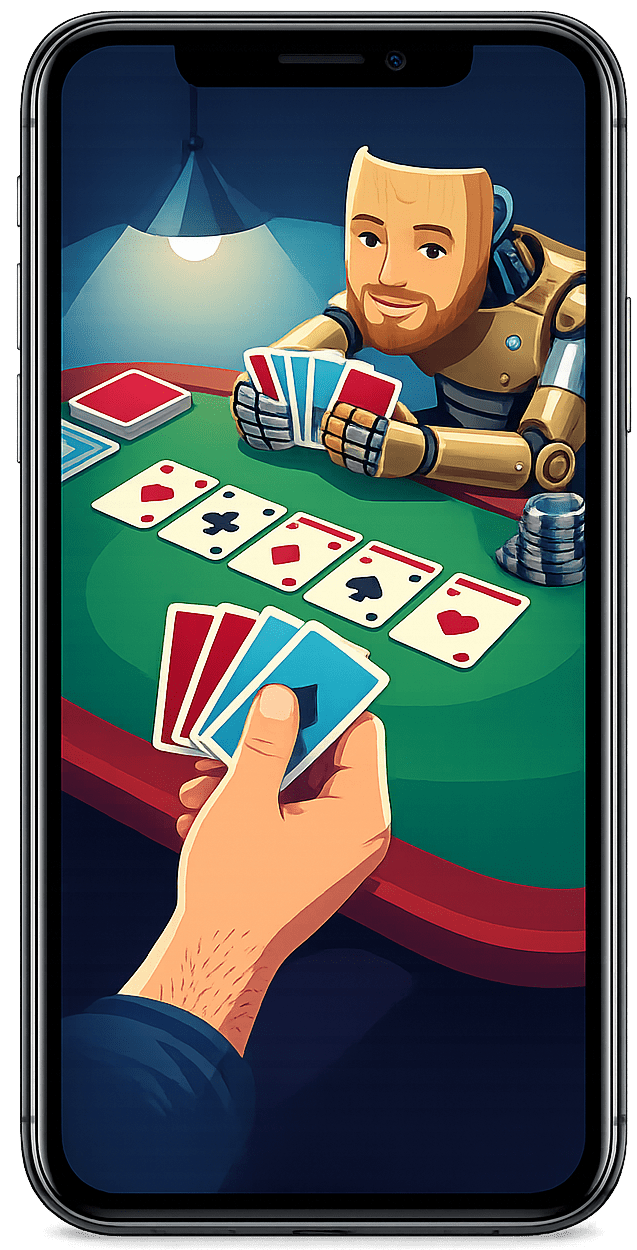
The judgment is particularly interesting for the gaming industry because it does not merely concern misleading ad copy. At its core lies a fundamental product mechanism: the widespread use of bots in tournaments where players paid entry fees and competed for cash prizes.
The court held that the issue was not merely that Papaya failed to disclose the existence of the bots. Alongside their use, it presented its games as fair, skill-based, and as matches where human players compete against other players of similar skill levels.
A Technological Solution to the Liquidity Problem
Skillz and Papaya compete in the market for real-money, skill-based mobile games. In this market, players pay entry fees for tournaments and compete for cash prizes.
A primary challenge for such a platform is player liquidity. For a tournament to launch quickly, a sufficient number of active players must be available for matching. A new platform lacking a large user base may struggle to provide customers with available opponents and a seamless gaming experience.
Skillz invested substantial sums in user acquisition and in building a player base to enable quick matchmaking.
According to the findings in the judgment, Papaya solved part of this problem using bots.
One type of bot was designed to fill tournaments. Thus, a tournament presented as having 20 participants could consist of a single human player and 19 bots. This allowed tournaments to start at any time and deliver rapid results to the player.
Another type, referred to in the judgment as “tailored bots”, was designed to influence tournament outcomes for a specific player. For example, a player on a losing streak might be given a win to encourage them to keep playing.
According to data presented at trial, tailored bots participated in over 630 million tournaments. Between 2021 and 2024, more than 13 million participants on the platform were actually bots, compared to approximately 11 million human players.
In early 2021, bots were used in about 90% of Papaya’s cash tournaments. Even close to when their use ceased in late 2023, they still participated in roughly half of all cash tournaments.
The use of bots allowed Papaya to offer immediately available tournaments and rapidly build a user base without incurring the full costs associated with acquiring a sufficient number of human players.
Not Merely Non-Disclosure, but False Statements
Papaya argued that the Lanham Act does not impose a general duty to disclose the use of bots to consumers.
The court ruled that this argument missed the point. The lawsuit was not based solely on the omission of information.
Papaya made active misrepresentations regarding how the game functioned. It described the games as “fair” and “skill-based”, declared that it had no stake in who won or lost, and promised that users would be matched with other players of similar skill levels.
The advertisements used images and terms that portrayed participants as human players. Furthermore, when users suspected they were playing against bots, Papaya explicitly responded that it did not use bots or computer-generated players.
Therefore, from the court’s perspective, this was not merely a question of whether a company must disclose every technological or algorithmic detail of its product.
The misrepresentations went to the core of the gaming experience: who the player is competing against, how the outcome is determined, whether the company interferes with the result, and to what extent the tournament is truly based on participant skill.
Why Was the Use of Bots Material to Players?
Papaya argued it was not proven that the misrepresentations influenced user decisions.
The court rejected this argument as well. The jury was presented with complaints from players who suspected they were competing against bots, as well as evidence that Papaya deleted posts on the subject, closed user accounts, and denied using bots.
Additionally, in a consumer survey submitted on behalf of Skillz, 66.8% of respondents answered that they would stop playing Papaya’s games if they discovered that some of their opponents were bots.
For gaming companies, the takeaway is that whether a user is playing against a human, a bot, or a system controlled by the company can constitute material information – particularly in a paid tournament featuring cash prizes.
Was the Harm Caused by the Bots or the False Advertising?
Papaya contended that any harm to Skillz resulted at most from the technological advantage gained by using bots, rather than from false advertising.
This distinction was central to the calculation of damages.
Skillz’s expert examined a hypothetical world in which Papaya did not use bots and was therefore required to invest larger sums in user acquisition and building genuine liquidity.
Papaya argued that a different hypothetical world should have been examined: one where it continued to use bots but disclosed this to consumers.
The court held that, based on the evidence, the court held that this hypothetical scenario could not exist. Had Papaya informed players that they might compete against bots – and that certain bots were designed to alter their outcomes – it would not necessarily have been able to attract users and build its operations in the same manner.
Moreover, Papaya was required to represent the nature of its games to app stores, payment processors, and advertising channels to demonstrate that its offerings were skill-based games rather than gambling. In these documents, the product was presented as a game where players compete against each other, not against Papaya.
The court ruled that the use of bots and the false advertising were inextricably linked. The bots allowed Papaya to create liquidity, while the representations of fair play between human players enabled it to market the product and attract users.
Diminution of Company Value Beyond Lost Transactions
Skillz’s expert estimated that the conduct diminished the company’s value by approximately $637.5 million.
The calculation was not based solely on the number of lost players or tournaments. It examined Skillz’s market share, the revenue Papaya generated, and the impact that the loss of users and revenue had on the valuation of Skillz’s operations.
Papaya argued that damages based on loss of enterprise value can only be awarded when a business is completely destroyed.
The court rejected this position, ruling that an ongoing business can also suffer a loss in value due to the loss of customers, revenue, and market share.
The jury awarded Skillz $420 million in damages – an amount roughly one-third lower than the expert’s estimate. The court viewed this as an indication that the jury accounted for other factors that may have affected Skillz’s position.
This finding is significant for claims in the software and intellectual property sectors. When a competitor’s conduct harms network effects, user base growth, and a company’s ability to scale, damages may be measured at the enterprise value level rather than through isolated transaction calculations.
Disgorgement of Profits Totaling $719 Million
In addition to the harm caused to Skillz, the profits Papaya derived from the conduct were also evaluated.
Skillz’s expert presented two models. Under one model, Papaya’s profits attributable to the conduct amounted to $719 million. Under an alternative model, the cost savings in user acquisition and retention amounted to approximately $652.6 million.
The jury recommended disgorgement of profits in the amount of $719 million, and the court adopted this figure.
Skillz requested to double the amount to over $1.4 billion, but the court denied the request. It was also clarified that Skillz is not entitled to receive both $420 million in damages and $719 million in disgorgement of profits for the same underlying injury.
Implications for the Gaming Industry
The judgment does not hold that every use of bots in a game is unlawful.
However, it illustrates the legal risks that arise when a gap exists between how a game operates and how it is represented to players, app stores, and payment providers.
Gaming companies utilizing bots, matchmaking algorithms, dynamic difficulty, personalization, or mechanisms designed to boost retention should review more than just their Terms of Service.
They must also evaluate advertisements, App Store pages, onboarding screens, FAQs, customer support responses, and in-game representations.
Phrases such as “fair”, “real players”, “skill-based”, or “play against players like you” may be deemed factual representations when they refer to the core operation of the game.
To the extent an undisclosed mechanism affects the identity of opponents, game outcomes, or the probability of winning, the disparity between the product and its marketing messaging may trigger not only consumer claims, but also competitor lawsuits for false advertising, loss of market share, and substantial disgorgement of profits.
Skillz was represented by King & Spalding; Papaya was represented by Kirkland & Ellis and Clement & Murphy.
